
The Power of Ritual
How The New York Times earned its place through modern rituals
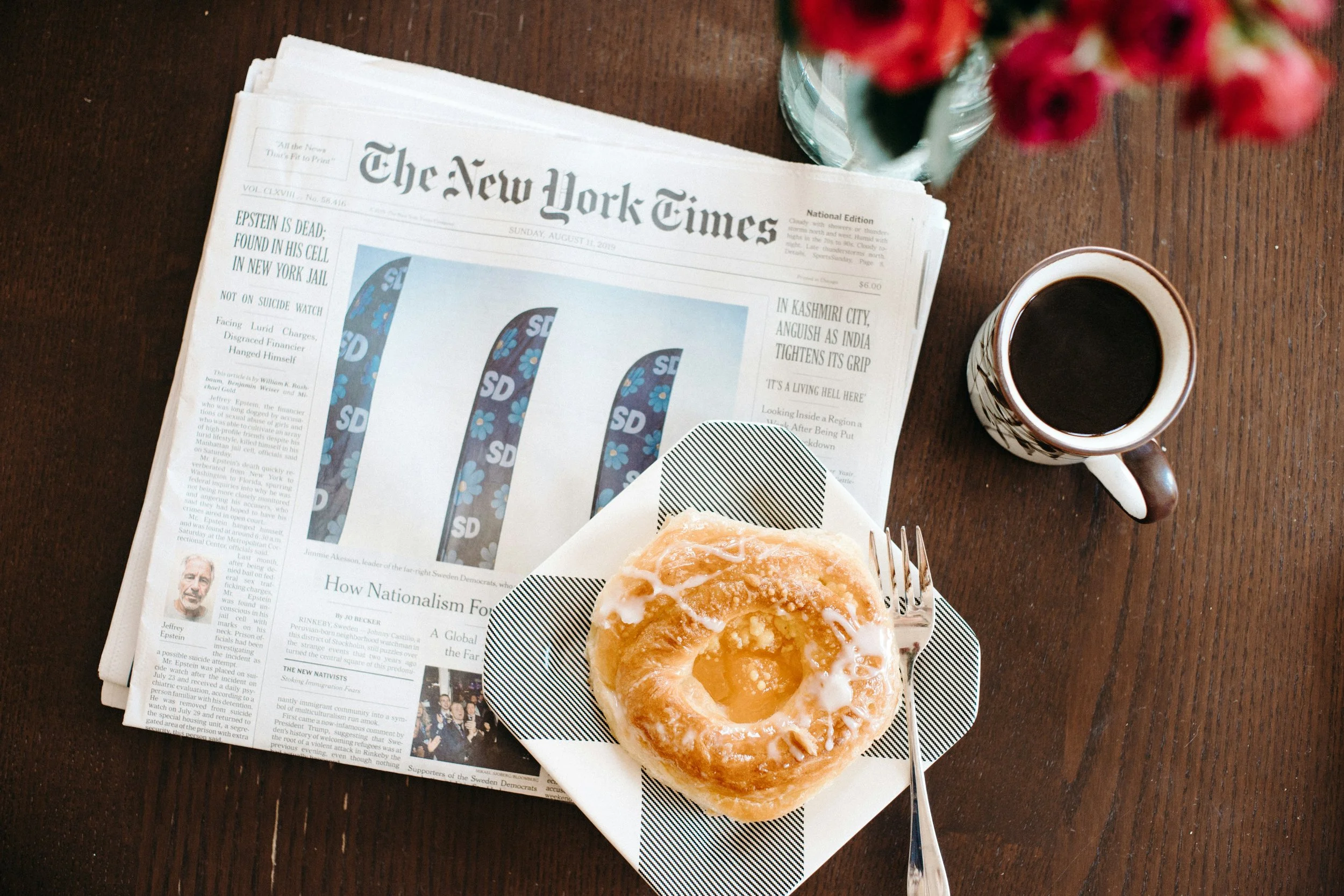
Photo by Sarah Shull on Unsplash
In my work with product-led brands, I know how much effort goes into building habits. Tracking DAU, WAU, MAU. Designing streaks, gamification, rewards. Nudging the customer to take the next action. All critical to sustaining a business, especially one that relies on recurring revenue.
But we get so caught up in the idea of habitualization that we forget what habits actually are in the minds of customers: efficient, automatic, and mostly forgettable.
The brands that stay with us are rarely the ones that optimize for habit. They are the ones that create rituals. I learned this early, long before I understood the idea of customer experience.
Where Rituals Begin
Growing up, the Sunday Times was our family’s weekly reset. Our kitchen table disappeared under a mountain of newsprint. My dad always started with the front page, my mom with the magazine, me with the Arts & Leisure section. Then we’d fold and switch. It was an activity we enjoyed together, in companionable silence, our fingers picking up ink and their mugs leaving faint rings on the discarded pages.
This was our ritual.
In high school, my mom began dropping the Op-Ed section in front of me at breakfast. “In preparation for the SATs,” she’d say. Her version of critical thinking training before coffee. It was exposure to complex arguments and gray-area debates, where answers weren’t clear-cut. Not sure I needed this first thing in the morning, but it was of course well-intended. For her it wasn’t about taking in news. It was about building a ritual around curiosity.
Habits are about efficiency, the things you do without thinking. Rituals are about intention, the moments that make you slow down and assign meaning to what you’re doing. For all of us, the Times made slowing down permissible.
When the Ritual Slipped Away (and Found Its Way Back)
In our early years of marriage, my husband and I created our own Times ritual. Coffee and a croissant, the Sunday pages, and the quiet joy of reading without purpose. I always saved the magazine for last, with the crossword lingering through the week. Those mornings felt like small luxuries, a pause before the week ahead.
Then we had kids.
The paper piled up unread. Our Sunday ritual collapsed, initially under the weight of sleepless nights, and over time, weekend sports.
Eventually, I canceled my print subscription and replaced it with digital headlines and the occasional podcast. Like many of my peers, I shifted to the Wall Street Journal, which felt practical, justifiable, work-adjacent. It kept me informed for sure. News consumption became a habit. Efficient, functional, but not a ritual.
Still, throughout the years I stayed connected to the Times through The Morning email. Occasionally a recipe from Cooking, or a scan through Wirecutter. I always appreciated the brand accepting my current routine, acknowledging its place without pushing the “habit.”
And then, my older daughter discovered Wordle, immersing us fully into the Times universe, daily. Together.
That’s when I realized what the Times had done so well. It wasn’t about chasing new habits. It had reimagined the rituals that made the brand matter in the first place, designing new ways to express the same values of curiosity, depth, and shared discovery. The Times built new on-ramps through its suite of products that connected me back to the brand.
That’s the quiet magic of a portfolio executed with intention. Every product stands alone, but in combination they remind you why the brand matters. The Times doesn’t try to out-game the algorithm. It creates experiences worth coming back to, those that make you carve out time instead of simply filling it.
Why It Works (and Why It Lasts)
There’s a reason rituals like this endure. Harvard Business Review found that emotionally connected customers deliver more than 3x the lifetime value and stay with brands five years longer than those who are merely satisfied. McKinsey’s Gen Z research shows that brand impressions formed early in a consumer’s life are especially powerful, creating loyalties that can last for years.
That’s the ritual premium. Habits drive repetition. Rituals drive retention.
You can see it in other corners of life. At Costco, the treasure hunt has become a shared ritual built around discovery and delight. At Trader Joe’s, the weekly trip feels less like an errand and more like a community event. On Strava, the small celebration of daily progress turns solo exercise into a shared ceremony. They all blend utility with emotion.
The Times evolved, while still honoring its emotional contract with customers, and giving us space to rediscover the brand on our own terms. Great CX leaders understand this instinctively. Habits make customers return. Rituals make them remember. The best ones give signals to pause, learn, connect, reset.
Coming Full Circle
So yes, we’ll resubscribe to the Times (looking at the Family plan as we speak). I mean after a two-part brand-crush series, how could I not? I’m even considering print again. Because despite the weekend madness, I’m excited at the possibility of setting a new ritual for my own family. One where my girls can experience the news without the barrage of notifications and alerts.
And yes, its a full-circle moment, especially since my oldest starts high school next year and I can already picture sliding the OpEds in front of her before she reaches for her phone.
For me this is the real lesson: Rituals don’t stay frozen in place. They shift as our lives shift. The Times understood that and evolved its portfolio in ways that meet readers at each new stage while holding onto what that made the brand matter in the first place.
What Enduring Brands Protect
The New York Times sets the standard for thoughtful brand stewardship. Rather than holding on to a single ritual, it protected the core meaning of the brand. Everything they’ve built and acquired ladders back to the same promise: Seek truth and help people understand the world. Its consistent delivery on that promise is what keeps the brand relevant. And for me, it remains one of the clearest examples of how brand relationships endure.
~~~~~~~~~~~~~~~~~~~~~~~~~~~~~~~~~~
Sources
