Seoul Reads the Room
Sometimes the best thing you can do is stop anticipating and create space for discovery.
I recently traveled to Seoul with my parents, my husband, and two daughters. A highly anticipated spring break trip, albeit with different stated goals for each: for my parents to show off Korea to their grandkids, for my girls a chance to hit up some cool cafes and beauty stores they’d heard about, and for my husband and me, to create a memorable experience for our family.
On paper, we had little in common in our connection to Korea. My parents left in the early seventies as graduate students, my mom only returning every few years. My dad had more context on the country’s transformation having built and run a business there. I’d spent summers in Seoul as a child and teen when Korea was emerging, just as the 1988 Olympics put it on the world’s map. My daughters arrived with some familiarity absorbed from their grandparents and their YouTube feed surfacing K-beauty treatments and dessert spots. My husband brought no direct history at all, just twenty years of experiencing the culture through his in-laws, and with it a clear view of the dynamics that could unfold on this trip.
What we shared was the expectation that it would not be a relaxing vacation. And for all my planning, I had completely underestimated Seoul.
Reading the Signals
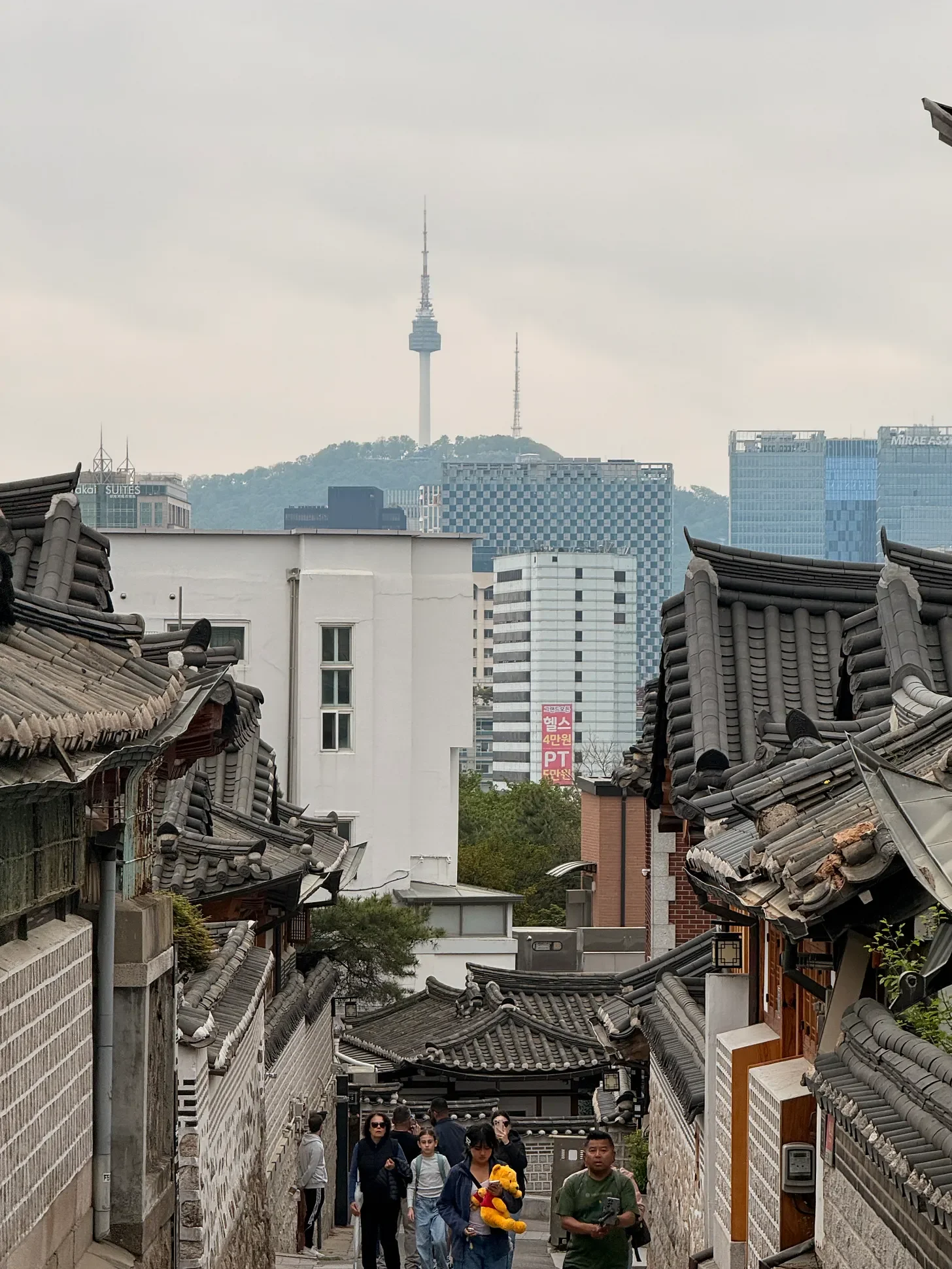
The city first hit us with all the qualities I remembered…and some I didn’t: busy, layered, moving fast, but underneath it all was a calm chaos. The packed subway cars ran perfectly on time. The dense windy streets somehow still made sense. And I noticed something different from my childhood visits, an experiential fluency that seemed to pervade every interaction, a generosity rooted in creating space and reading signals rather than directing people through predetermined paths.
We had a family dinner at Yilyilhyang Euljiro,a Chinese-Korean restaurant, the sort of family-style place where shared dishes arrive in waves, sweeping you into an intoxicating epicurean cultural immersion. And the kind of place where someone with a shellfish allergy and limited Korean speaking skills could face real problems. But this wasn’t about a picky eater navigating an unfamiliar menu. These were foods I grew up eating, flavors I’d been missing since a shellfish allergy developed in my late twenties. Every time I had to ask whether something was safe, there was a visible disappointment I couldn’t hide.
But what followed wasn’t an apology or a shrug. The restaurant took this in, and in subsequent courses they arrived with individual servings of crustacean and mollusk-free alternatives — jajangmyeon, dak kalguksu, pork belly slices — for every dish I couldn’t share. Authentic, memory-stirring substitutes. They didn’t make me feel like a problem to be managed. They made me feel like a guest who had been seen.
Being seen doesn’t always mean being attended to. Sometimes it means being trusted to find your own way.
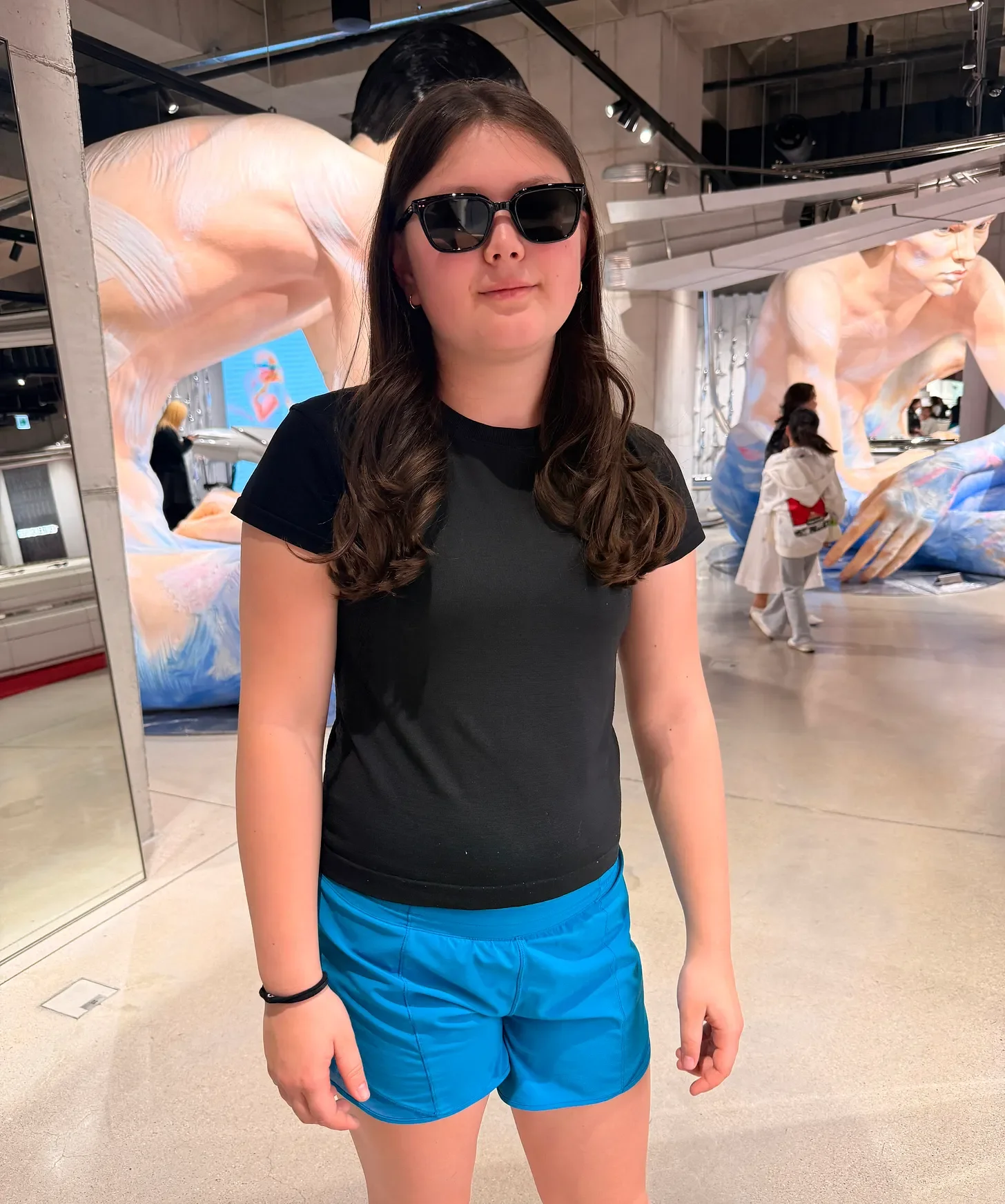
Gentle Monster’s flagship spaces in Apgujeong and Seongsu aren’t stores in any conventional sense but environments you wander into and figure out on your own terms. No one pushes or pitches – the brand simply reveals itself through discovery. My eighth grader, who would normally walk past a sunglasses counter without a second glance, spent twenty minutes trying on frames with me.
That restraint wasn’t limited to concept stores. Dongdaemun Market and Ssamziegil displayed this as well: one a vast market complex that has anchored Seoul commerce for decades, the other a craft market tucked into Insadong’s alleyways. Both are organized enough to orient you, open enough to let you wander.
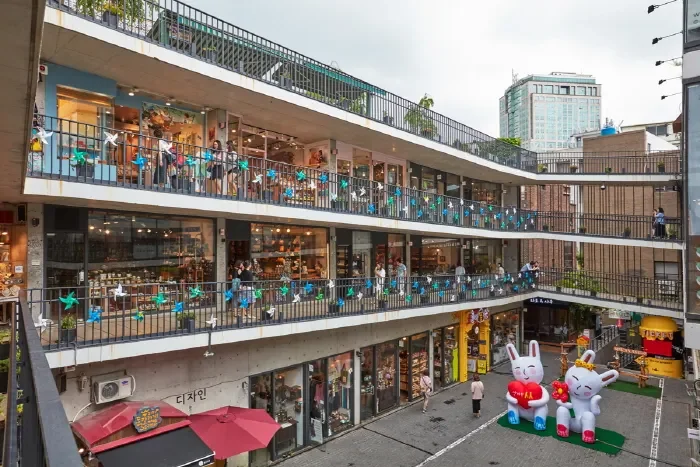
This is what I mean by experiential fluency at city scale. Over and over Seoul showed an understanding that the deepest engagement happens when you create the conditions for discovery…and then get out of the way.
Out of everyone in our group, my dad was the one who could best measure how far the city had come. He mentioned it unprompted one evening, “The people are nicer.” For someone who grew up in the Korea I described: brusque, efficient, purposeful, this wasn’t a throwaway statement. And what I saw was a city that had shifted from imposing an agenda and ushering people through it, to being present and observant.
Seoul was creating space everywhere we went. I, meanwhile, had accounted for every hour of our trip.
When the Planned Journey Falls Apart
So while my parents wanted to show off their hometown, I made it clear from the start that I would grab the reins on our trip planning. I had sourced inputs from Seoul natives, expats who loved the city, AI rabbit holes, and the YouTube videos my daughters kept sending me. I wanted to be the one to package it up into an unforgettable experience for all. So I took full ownership of the itinerary and my parents graciously relinquished control, recognizing they didn’t have much of a choice.
On paper it was a well-designed journey: Hongdae and the Seoul Line Forest Park eased us in, Myeongdong leaned into its western approachability, the palaces and Insadong introduced Korean tradition, and Gangnam and Jamsil rewarded us with global retail experiences. I populated those anchors with a dizzying array of activities intending to meet everyone’s needs. I was pretty pleased with my spreadsheet, a comprehensive, sequenced, and optimized plan. But early in the trip I started to feel the seams.
Gyeongbokgung Palace was the first signal, but in the opposite direction I expected. My plan was to step in, watch the changing of the guard, take some quick pictures, and get us to our next destination. My mother had other ideas, which included dressing us in hanboks. I could see the girls recoiling, and I was poised to override her — schedule in hand. But my husband saw how much it mattered to her, rallied us, and off we went to one of the rental shops. The palace experience took on an entirely new meaning once we were dressed in full skirts and hair pieces, with my husband’s sword making the rounds. The grounds absorbed us. We got photographs we’ll keep forever. None of this was baked in as part of my plan.
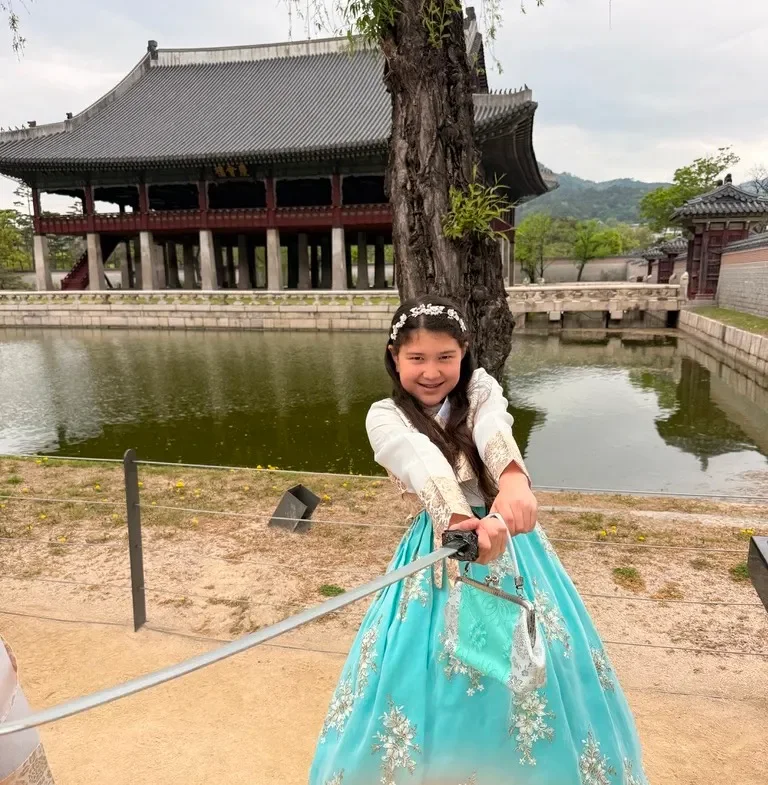
I should have learned something from that. But I didn’t. Instead I pressed on, checking off each stop on my itinerary with the same brusque efficiency I’d experienced from eighties Korea, too focused on the next item to notice what was actually happening around me.
A few mornings later came the Naksan Wall walk, which while compelling on paper, devolved into four cranky people counting steps until it was over. Then the Dongdaemun Design Plaza, Zaha Hadid’s swooping landmark building, worth seeing for the architecture, but we arrived on a day when the exhibitions were sparse and the energy was flat. I had crammed so much into our days, leaving no room for anyone to recover, and I could feel the uprising against the schedule I’d so meticulously built.
I wasn’t creating conditions for my family to experience the city the way Seoul itself was inviting them to. I was imposing my schedule on their exhaustion.
So I released my grip.
What followed was some of the best of the trip. Dongdaemun Wholesale Market, which I’d visited as a teen and half-dismissed as a childhood memory, turned out to be extraordinary. The girls spent a solid couple of hours at the stalls where you could custom-build typewriter key fidgets, raiding each booth to build gifts for friends. A memory I’d carried for decades, remade in front of me by my own kids. I dropped most of the other brand retail experiences to create room to linger in Seongsu, where my girls made their own fragrances at Rettre, pulling scent memories from photographs we’d taken together.
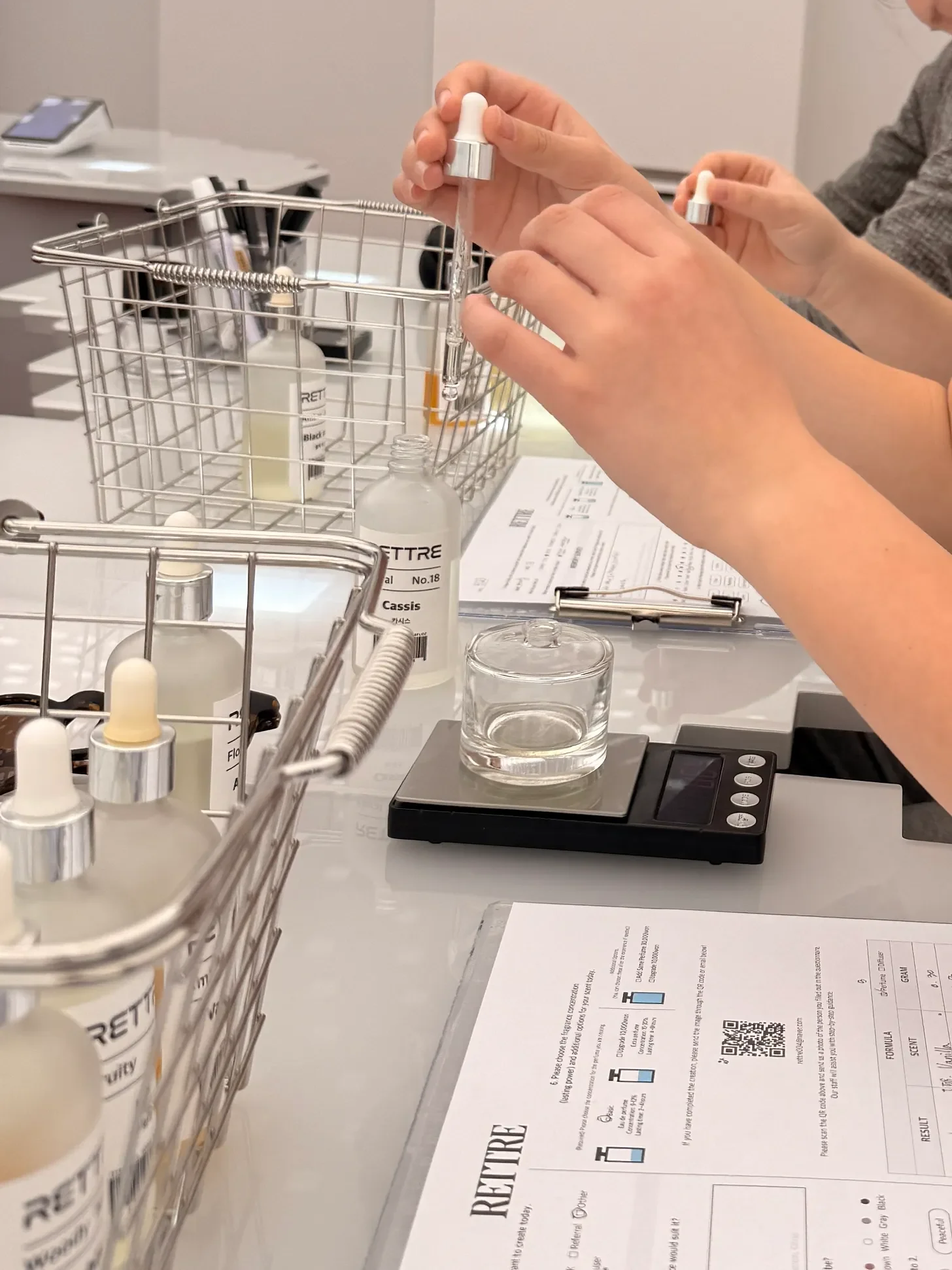
They also personalized whipped cleansers, we sat for a family caricature, they made their own gel pens at Mon Ami, and snacked on salt bread. And I watched my mother fully experience the neighborhood with her grandchildren, taking in the fact that her family’s factories which stood there sixty years earlier, had vanished completely, remade into something entirely different than what they ever could have predicted.
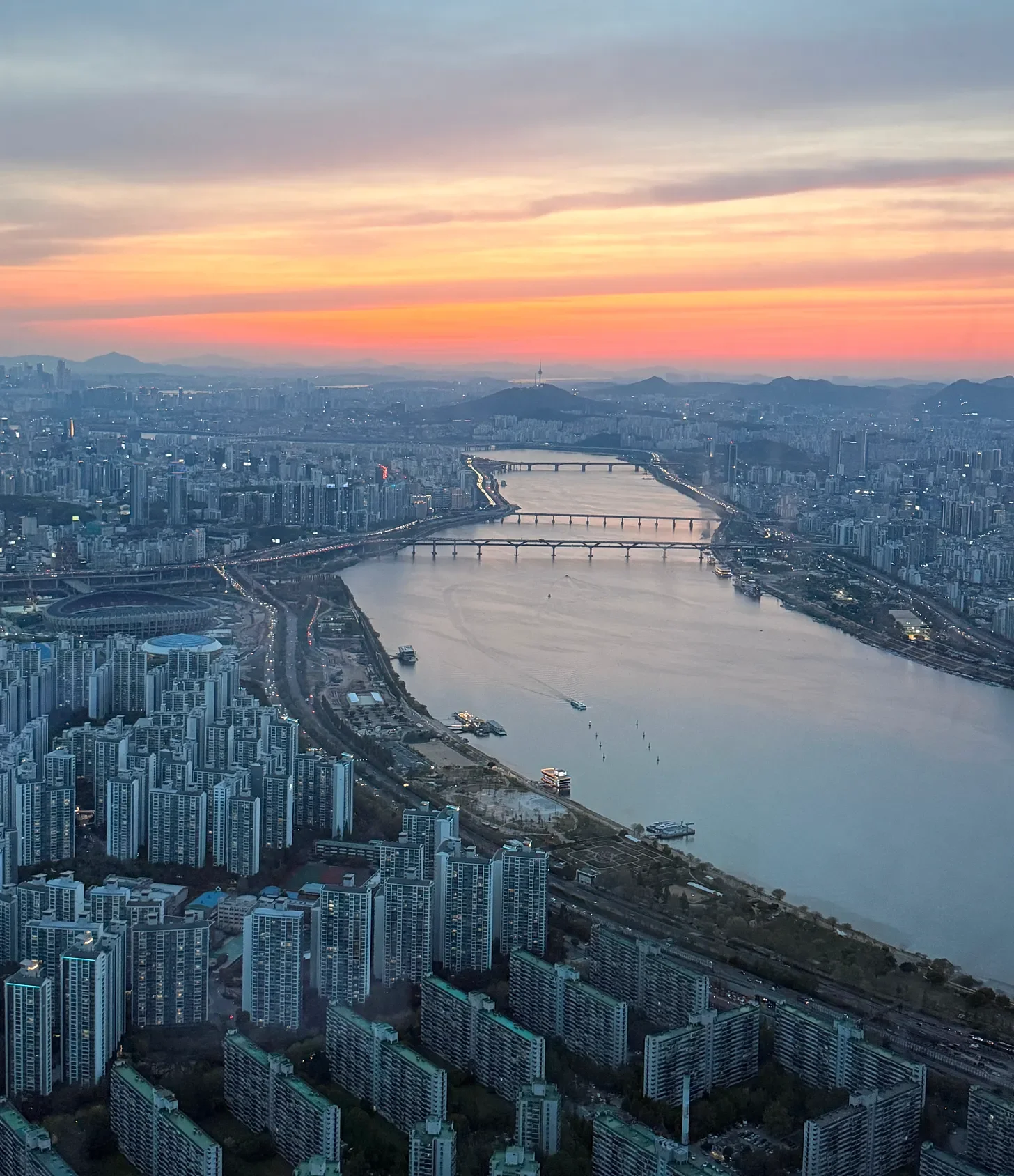
As we settled into Jamsil, the Lotte Seoul Sky Observatory loomed in front of us. My father, the one with the deepest and most complicated relationship to old Seoul, and the last person I would have expected to indulge in an unapologetically tourist experience, pushed us to go, perhaps for the chance to see his beloved city from a completely different vantage point. We ate dinner at the top of the tower and watched the most spectacular sunset I have seen in years spread across the city below us.
What Gets Carried Forward
Our last night was always going to be practical. An early morning for six people means an airport hotel, and the Hyatt Regency at Incheon was the logical choice. The kind of night that gets written off before it starts with room service, early bedtime, and luggage by the door.
We were all wrecked. A full week of moving through a city that rewards curiosity had caught up with us, and my parents most of all. The easier thing would have been to retreat to our rooms and leave it at that.
But Paradise City was next door, and my husband made the case for one more outing. Getting six of us, running on fumes, out the door took some doing. But the girls got their grandparents onto the Hyatt’s turf fields to kick a soccer ball around, and somehow that loosened everyone up. Then we walked over to Paradise City itself, which occupies the bizarre and wonderful territory between luxury hotel, contemporary art museum, and Las Vegas fever dream. Sensory-overload at its finest.
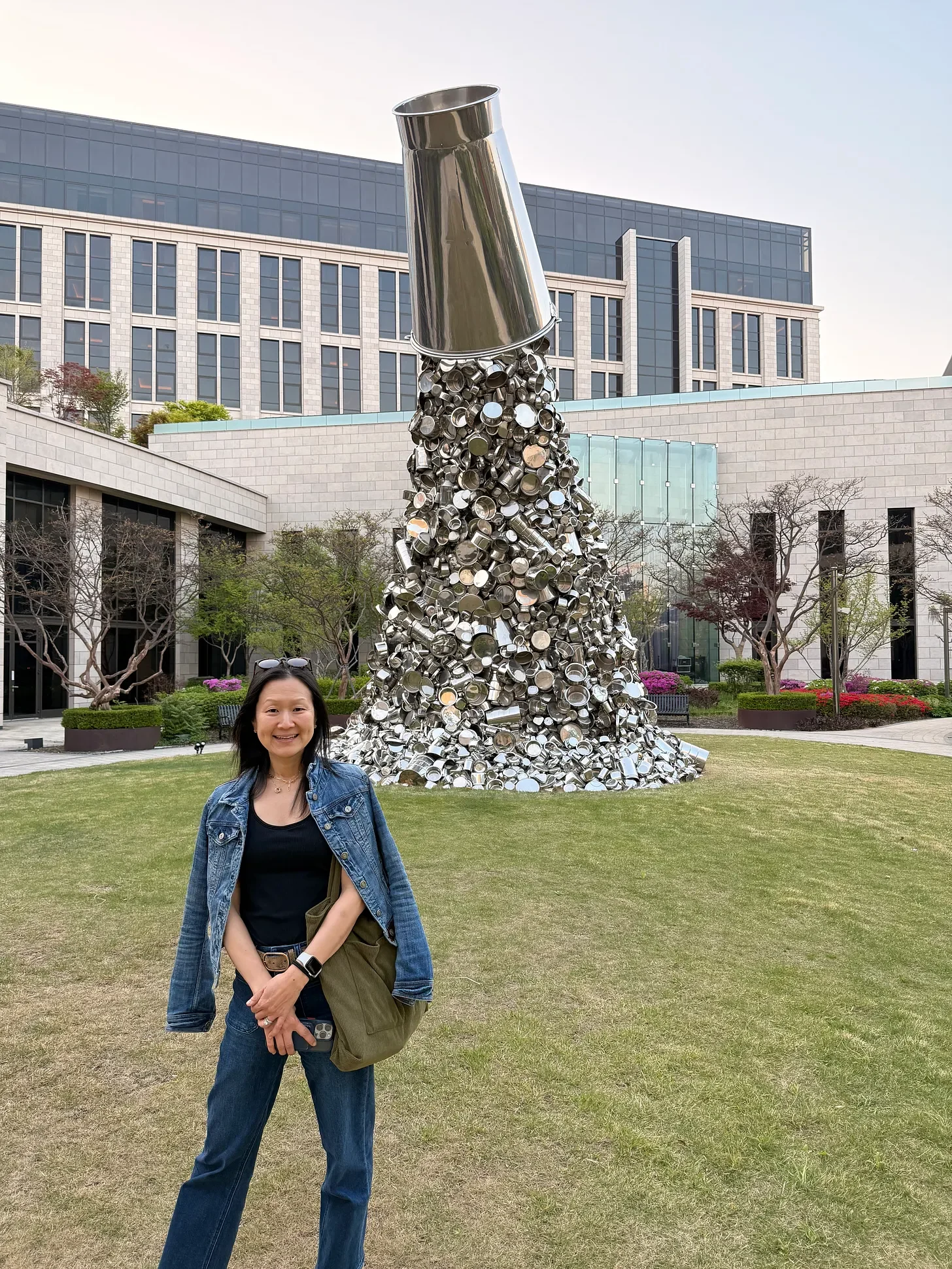
They were in awe. Not the polite awe of tired people being good sports, but something genuine and wide open. Another reminder, on the last night, of how much this country had become. My parents carry Korea’s history in a way I only partially do, and my daughters never will: the memories, the before, the weight of what was left behind.
Watching them take in what it had become, I found myself sitting with questions I hadn’t fully formed until that moment. When the generation most anchored to that history is gone, what do we carry forward? What does Korea become to my daughters, and to theirs?
I honestly don’t know yet. But in reflecting on this trip, and especially on what shifted when I stopped orchestrating and made room for discovery, I saw firsthand what space creates: meaning that couldn’t be scripted, experiences that felt genuinely personal, and a way of seeing the country that could only pass between generations in a moment like this.
Building for Discovery
What I kept coming back to, long after we landed home, was how few of the moments I’d planned were the ones we’d remember. The hanbok photographs. My dinner at the top of the Sky Observatory. My parents in awe at Paradise City. None of those were on the itinerary. Every one of them happened in the space I created by letting go.
Data-driven personalization has become the gold standard; the promise of an individualized experience built on knowing exactly what someone needs before they ask. But the harder and more valuable skill isn’t anticipating every need and scripting the journey around it. It’s creating conditions open enough that people can find their own way in. What Seoul was doing was different: observational, patient, attuned to where people actually are rather than where a customer profile says they should be. The shellfish alternative wasn’t on the menu. The space inside Gentle Monster wasn’t designed to convert. The typewriter key stall at Dongdaemun didn’t need to explain itself. Seoul seemed to understand this intuitively, not by presuming to know what each visitor needed, but by creating enough space to observe, take in inputs and allow people to discover.
Most brands claim to know their customers. Far fewer understand what is behind their attitudes and behaviors. An audience definition might help categorize someone, but it doesn’t tell you that they’re tired, or grieving something, or arriving with fifty years of complicated history, or experiencing something for the first time through the lens of a YouTube algorithm.
And from there when you stop directing and start creating space, people find their own relationship with the experience. That relationship is more personal, more memorable, and more durable than anything a tightly managed journey produces. It’s the difference between an experience someone completes and one they own.
Korean hospitality, at least as I had experienced it in earlier decades, was imposing. It moved fast and expected you to keep up. What I encountered on this trip was different: watching and offering and adjusting, not waiting to be asked but never presuming either. This is where trust gets built, and where the most meaningful experiences begin.
A few questions worth sitting with, whether you’re building a brand or planning your next family vacation:
How do you look beyond just who your customer is…and see what truly motivates them?
How much of your experience is designed to deliver, and how much of it is designed to listen?
And what would it look like to create enough space for something genuinely meaningful to emerge?